

I caught myself doing it again last week: someone asked for something — my time, my agreement, my presence — and I said yes while everything inside me said no. The yes came out smooth and warm. The no stayed where it has always stayed: underground.
If you have been doing this work for any length of time, you have probably learned to call this a split. The performing self and the feeling self. The one who shows up and the one who got left behind. And somewhere along the way, perhaps without ever deciding to, you have probably also absorbed the idea that the split is the problem. The defect. The thing to be eliminated.
I want to offer a different starting point: the split was originally intelligent.
The guard at the door
Think back, if you can bear to, to when the division first formed. For most of us this is not a single dramatic moment but a slow accumulation of lessons. Anger made someone leave the room. Sadness made someone uncomfortable. Need made someone disappear. The message arrived, in a hundred small deliveries: some of you is welcome here, and some of you is not.
A child cannot survive that message by arguing with it. A child survives it by complying — by appointing, somewhere in the psyche, a guard whose job is to keep the unwelcome parts out of sight. The guard learns the household rules perfectly. It knows exactly which feelings are dangerous and exactly how to intercept them before they reach the surface.
And here is the thing we forget when we declare war on our own divisions: the guard worked. You are here. You made it through. The split that now frustrates you, the smooth yes covering the buried no, was once the most sophisticated protection available to a person who had very few options.
The split is not evidence of your brokenness. It is evidence of your ingenuity under conditions you did not choose.
Why demolition fails
This matters practically, not just philosophically, because the stance we take toward the split determines whether healing is possible at all.
When we treat the split as an enemy, we approach it the way we approach any enemy: with force, with judgment, with the intention to destroy. We catch ourselves performing and feel disgust. We notice the silence where the no should be and feel shame that it is still silent. We try to make ourselves authentic — a contradiction so complete that the effort defeats itself.
The guard, meanwhile, registers all of this exactly as it has always registered threat, and does what guards do. It tightens. The body doesn’t malfunction. It escalates. The parts of us we are trying to liberate retreat further, because the voice demanding their liberation sounds suspiciously like the voices that exiled them in the first place: critical, impatient, conditional.
You cannot bully a protector into standing down. You can only convince it that the danger has passed.
Renegotiation, not removal
What actually changes things, slowly and undramatically, the way real change moves, is approaching the split with something closer to gratitude.
Not gratitude as performance. Not “thank you, now please leave.” Something more like the gratitude you might feel toward a soldier who has been standing at a post for thirty years because no one ever told them the war ended. There is respect in that recognition. There is grief in it too: for how long the post was held, for what the holding cost.
From that stance, a different kind of conversation becomes possible. Instead of why are you like this, we can ask: what were you protecting me from? Instead of I need you gone, we can offer: I’m older now. I have options you didn’t have. Would you be willing to let me handle some of this?
The guard does not surrender to this conversation. It softens into it, sometimes over months, sometimes over years. The split does not vanish. It becomes permeable. The no that lived underground starts to surface in small, survivable ways: a pause before the automatic yes, a sentence spoken slightly closer to the truth, a feeling allowed to stay in the room thirty seconds longer than it used to.
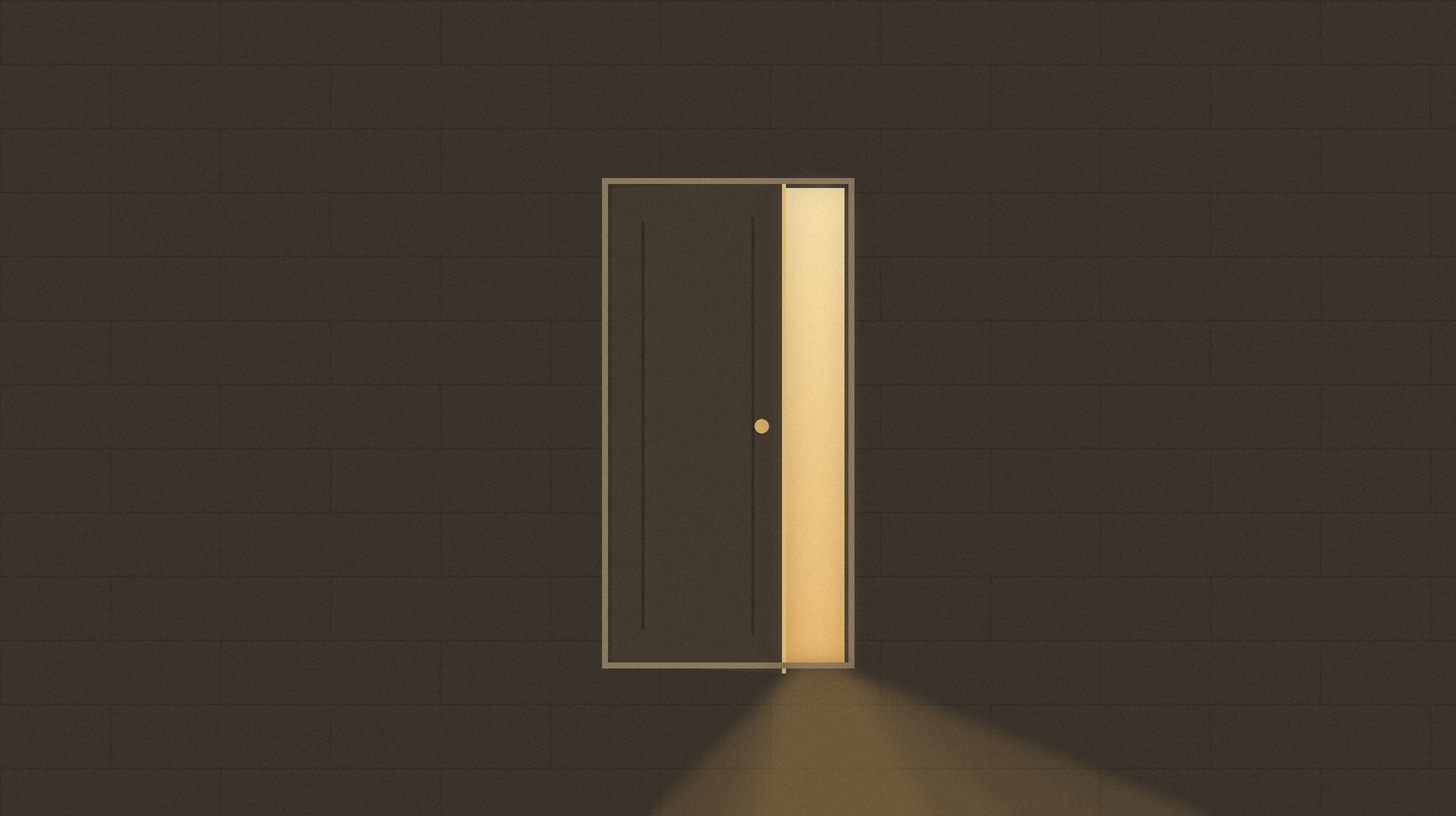
This is what integration actually looks like from the inside. Not a wall coming down in one cinematic moment, but a door appearing in the wall, and then the door opening a little more often.
A question to sit with
So today, instead of asking how do I get rid of my split, try asking the older, kinder question:
What was this division protecting, and what did the protection cost?
Both halves of that question matter. The first honors the intelligence of the adaptation. The second honors your right to want something more than survival now.
The split is not your enemy. It is your oldest employee, still working from an outdated job description. You don’t fire someone like that.
You sit down with them, and you write a new one together.
Subscribe at healingthesplit.com.
Dr. Shiv Kumar Goel, MD, FACP, is a board-certified internal and functional medicine physician in San Antonio and founder of Prime Vitality. He is the author of the forthcoming Healing the Split: When Your Biology Is Fighting Your Biography and writes at healingthesplit.com.