

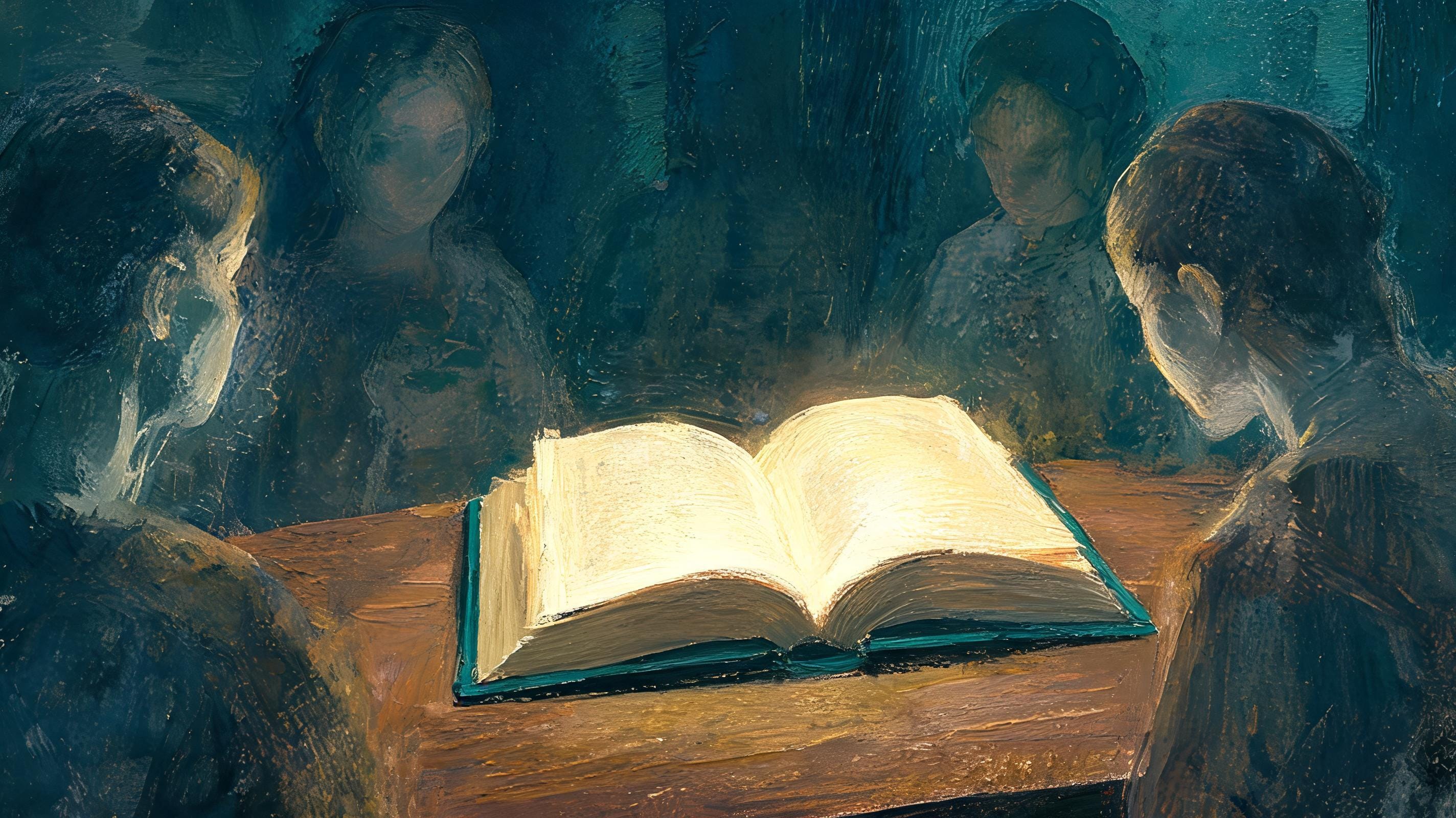
I have always laid my cards down flat.
Every one of them. Face up. Nothing tucked away in a sleeve, no strategy, no performance. Just the full hand — spread wide across the table for anyone willing to look.
And yet.
They squint. They hesitate. They circle slowly, convinced there must be a trick somewhere. Because surely, no one is this open. Surely, transparency this complete must be concealing something.
So they lean in and begin to read.
But not my cards. Their own.
Every line they trace is a fear they never named out loud. Every meaning they extract is a story they have been carrying — pressed tight against their own chest, never shown to anyone. They read their secrets and call them mine. They hear their own voice and think it is my confession.
I was not bluffing. I was simply the only one at the table who stopped pretending.
I am an open book — always have been. Every page turned, every chapter bare. No locked rooms, no torn-out entries, no careful editing of the parts that do not look good in daylight.
So why does no one read me?
The ones who try — they skim. They scan for what they already expect to find, recognize the familiar, skip the rest, and call it understanding. They do not read my words. They read their own translation of them — filtered through their fears, their projections, their unresolved stories — and hand it back to me as if it is mine.
This, I have come to understand, is the cruelest irony of openness.
You lay everything down and discover that most people do not know how to read something that is not written in their own language. Transparency is not enough. It never was. The reader has to be willing to set down their own story long enough to receive yours.
Most are not willing.
She came in with everything already organized.
Every symptom dated. Every prior diagnosis labeled. Every medication, every reaction, every physician she had seen over fourteen years — laid out in a document she had written herself, printed and brought to the appointment.
Fourteen years. Eleven physicians.
She had been transparent with every one of them. More than transparent. She had done the work most patients never do. She had named the pattern before anyone asked. She had connected the fatigue to the insomnia, the insomnia to the anxiety, the anxiety to the year her mother died, and the year her mother died to the decade that followed — the one she described as living at half-volume.
Nobody had slowed down long enough to receive it.
They read the labs. They adjusted the medications. They treated each complaint as its own event — a separate chapter in a book they never bothered to open.
One physician told her she was too focused on her symptoms. Another told her the anxiety was driving everything. A third ordered more tests and never followed up.
She was not complicated. She was clear. She had done the translation for them. She had handed them the map, labeled and legible, and they had filed it away and looked instead for what they already knew how to find.
What it cost her was fourteen years. And a particular kind of exhaustion that is different from tiredness — the exhaustion of being present, fully available, and still invisible.
What changed when I slowed down was this: I read what she actually wrote.
Not the labs. The document. Her document. The one she had brought to eleven appointments before mine.
I asked two questions nobody had asked. She answered in one sentence each. We sat with both answers for a moment.
She said: Nobody has ever just let it sit there before.
I said: I know.
All identifying details have been modified.
I have sat with hundreds of people in their most vulnerable moments. And I have noticed something quietly devastating. The most transparent people in the room are often the most misunderstood.
Not because they are complicated.
Because depth requires the reader to slow down. To set aside their own narrative for a moment. To actually listen, rather than interpret.
Most people never do.
They are too busy holding their own deck tightly against their chest — reading their hidden cards so loud inside their own heads that they mistake their own reflection for someone else’s truth.
Your symptoms are not random. They are your biography written in your biology.
The first failure — before any lab, before any scan — is often this: no one actually read the book the patient laid open on the table.
There is a particular kind of loneliness that belongs only to the truly open.
It is not the loneliness of isolation. It is worse.
It is the loneliness of presence — of being right there, fully available, wide open — and watching people look straight through you. Or worse, look at you and see only themselves.
I know this loneliness from inside the clinic. I know it from inside my own life.
The split between who you are and how you are received — that is a real fracture. It accumulates slowly, quietly, in the way that small inflammations accumulate over years before they finally become something a test can measure.
The body does not malfunction. It escalates.
And so does the silence around the person no one learned to read.
This is why I write.
Not because writing guarantees being understood. It does not.
But because the page receives what people often cannot. It holds exactly what you give it. It does not translate, filter, or hand it back misread. The words stay where you put them. They do not rearrange themselves into someone else’s story while you are not looking.
Writing does not misunderstand you.
And maybe that is enough — to be witnessed, even if only by yourself. To name the thing. To lay the card down. To say this is real, this happened, this is who I am — and let it exist somewhere outside the silence.
Write it down.
Dr. Shiv Kumar Goel, MD, FACP, is a board-certified internal and functional medicine physician in San Antonio, founder of Prime Vitality Wellness®, host of the Healing the Split podcast, and author of the forthcoming Healing the Split: When Your Biology Is Fighting Your Biography. He writes at healingthesplit.com.
I agree with Dr Yildiz. We need more healthcare professionals with this level of dedication and care. Often, I feel just like another number getting checked off a list. Attention and understanding appear lost in modern medical practices, and if I hear one more person say, "It must be anxiety..."
Thank you, Dr Goel, for writing this poetic prose in such a meaningful and engaging way. Your dedication to caring for vulnerable people through holistic healthcare is exemplary and worthy of the highest respect. I wish more healthcare professionals brought the same compassion, empathy, and unwavering support to the people they serve.