

Spiritual exhaustion is the part of awakening almost no one warns you about. It’s not just being tired; it’s the kind of bone‑deep fatigue that seeps into your cells, your thoughts, your relationships, and makes you wonder, “If I’m waking up, why does it hurt this much?”
This is my story, and I’m sharing it for everyone who’s in the same boat
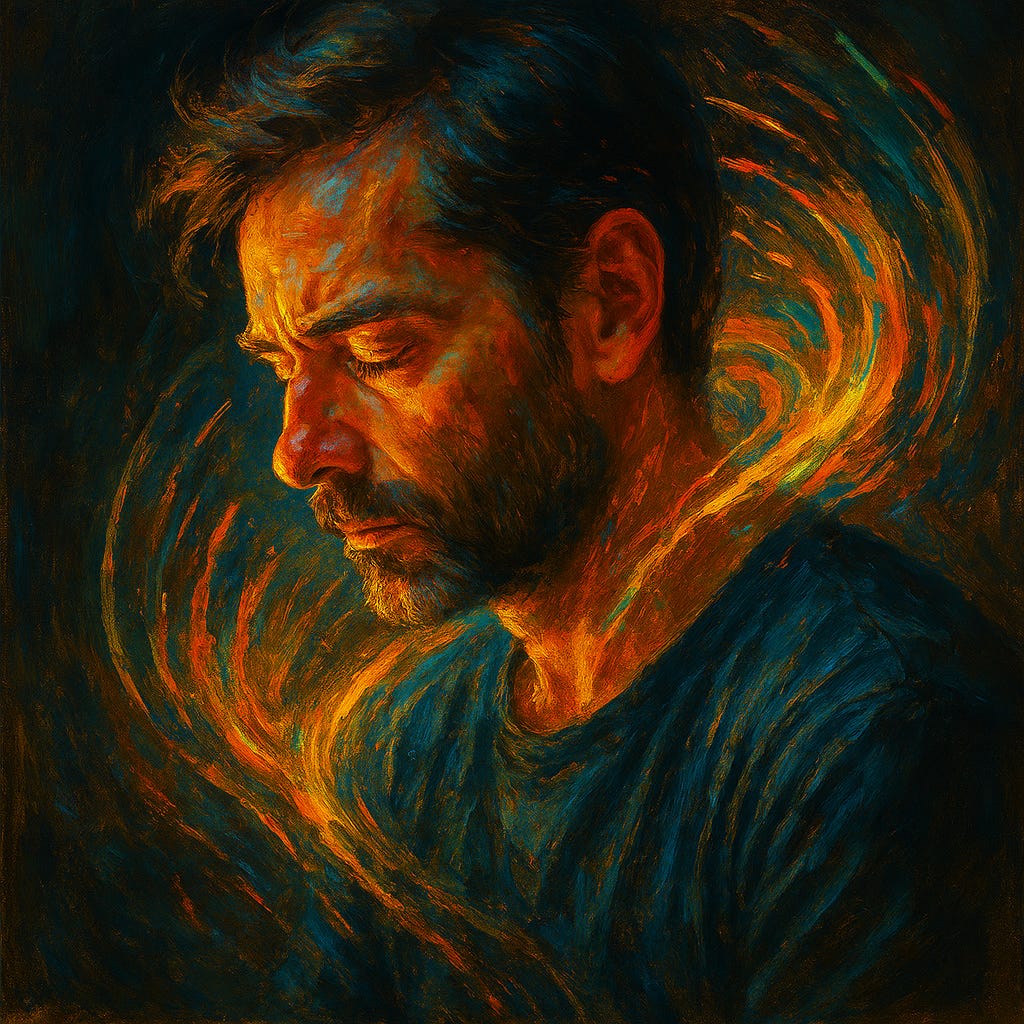
For a long time, I thought awakening would feel like a clean break.
One day asleep, the next day enlightened. More peace, more clarity, more love. As a physician and a seeker, I read, meditated, fasted, listened to teachers, and slowly watched my old life unravel — my clinic, my finances, my roles, my sense of who I was.
What I didn’t expect was how exhausting it would be.
Not just end‑of‑the‑day tired, but soul‑level exhaustion: the kind that doesn’t show on lab tests, but lives in your nervous system, your chest, your sleep, your bank account, your relationships. I went through multiple “dark nights,” more than one near‑collapse, and even now I’m still integrating waves of change that have left me with millions in debt and a life that looks nothing like the one I built before.
Awakening changed everything — just not in the way I imagined.
The Trampoline Phase of Awakening
My awakening did not arrive as a single lightning bolt. It came in waves — especially over the last three years, where I often feel like I’ve died and been reborn again and again.
At first, it felt like a trampoline:
One day I’d be flying: expanded, clear, overflowing with love and insight, watching visions of light, suns, pyramids, spirals of energy, feeling my consciousness stretch across the Earth.
The next day I’d crash: back into fear, grief, financial panic, old patterns, and a body that felt like it had been hit by an invisible truck.
Up. Down. Up. Down.
On paper, I was a “high‑functioning” physician, still seeing patients, running a clinic, juggling staff and responsibilities. Inside, I felt like someone had pulled the floor out from under my old identity. I was stretched between two worlds: the old one that no longer fit, and a new one that hadn’t fully arrived.
That trampoline phase took a toll on everything — my health, my emotions, my sense of reality. Some days I felt like a mystic. Other days I felt like I was losing my mind.
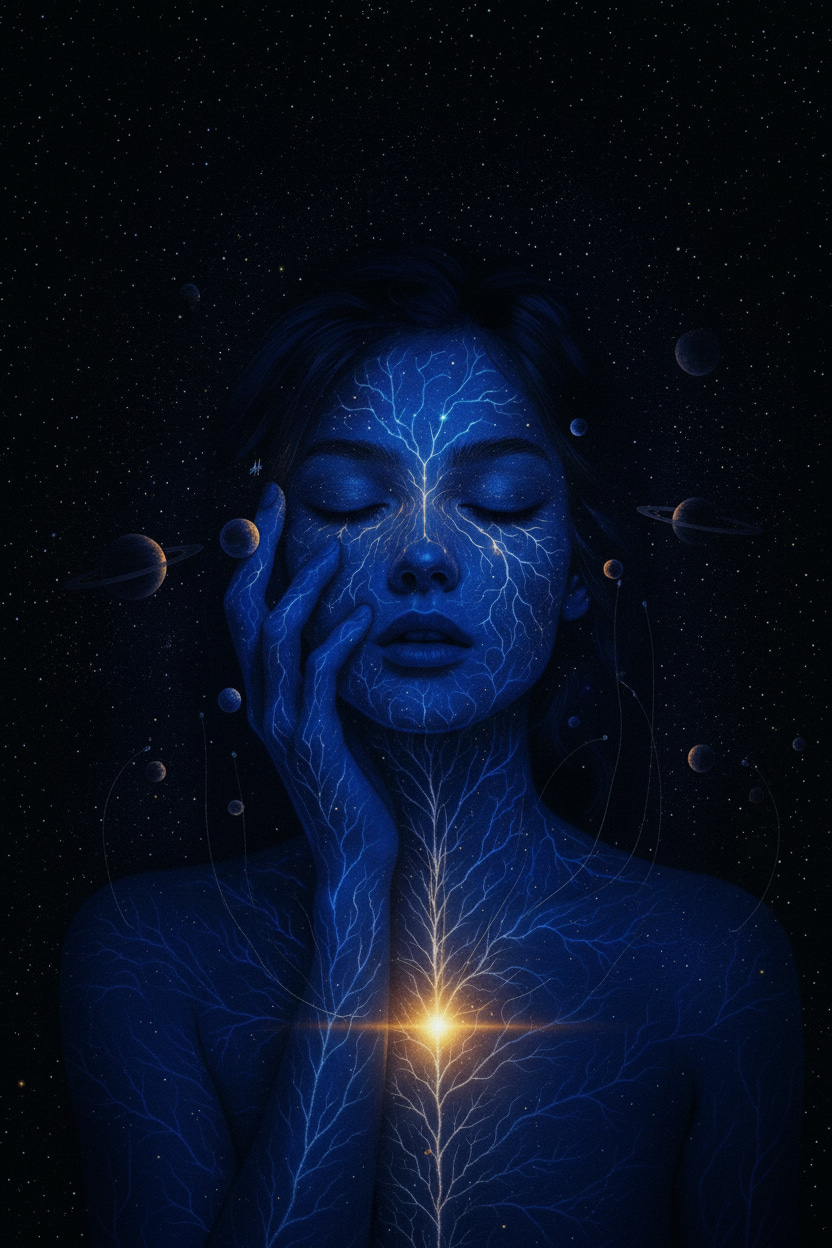
The Day I Thought I Had Died
There was a period when the exhaustion and dissociation were so intense that I genuinely questioned if I was still alive.
Days went by where I was barely aware of my own presence. I was moving, working, talking, but it felt like I was watching my life from somewhere slightly outside of myself. Reality was there, but I was not fully in it.
I still remember the day something cracked.
I walked into the bathroom, looked up, and for the first time in what felt like forever, I actually saw myself in the mirror. Not the doctor, not the healer, not the one holding it all together — but a person who had been quietly dying inside while keeping everyone else alive.
For a moment, it felt like someone was looking back at me from the other side of the glass — calm, clear, almost like a future version of me who had already survived this. In my Medium piece “The Glitch: A Message for Those Who Already Know,” I described that sensation of being “no one,” of suddenly realizing the old costume had fallen away and something deeper was staring through the cracks.
That mirror moment didn’t solve my debts, rewrite my past, or magically fix my life. But it did something very important: it snapped me back into presence.
It reminded me: I’m still here. I haven’t disappeared. There is a “me” behind all this exhaustion — and he is worth saving.
“If I’m So Awake, Why Do I Feel Like This?”
In the middle of all this, a painful dialogue started inside:
“I’m more awakened now — so why am I feeling like this?”
“I shouldn’t be this angry, scared, or exhausted. I’m spiritual.”
Sound familiar?
This is where I suffered the most — not from the feelings themselves, but from my judgment about the feelings. I was using spirituality as a measuring stick and a weapon.
I had visions where my consciousness became a vast sun, where the Earth merged into that light, where I watched a serpent dissolve in solar fire — a clear message that old patterns were being burned away. I saw spirals of DNA, pyramids, cosmic tunnels of light, felt the presence of soul tribes gathering around me.
And the next day I was still the same human being trying to pay bills, manage a clinic in crisis, hold space for patients, and figure out how to survive with over two million dollars in debt.
It is disorienting to feel like the sun in meditation and like a failure in daily life.
For a long time, I thought this meant my awakening “wasn’t working.” Now I see it differently: I was being shown what I am at the deepest level, while my human life caught up — slowly, painfully, imperfectly.
3D Body, 5D Spirit
What I slowly realized is this:
My body and mind were still wired for a 3D reality — training, culture, trauma, survival mode, the habits of a doctor who had spent years overriding his own needs to care for everyone else.
My spirit and awareness were touching something like 5D and beyond — unity, non‑separation, the felt sense that I am not separate from the field of consciousness I experience in meditation.
In deep states, I could feel myself as light, as presence, as something far vaster than “Dr. So‑and‑So.” Then I would stand up — and the nervous system that grew up in this world was still there: the fear, the exhaustion, the imprint of years of pushing beyond my limits.
No amount of insight can erase the reality that the body and psyche need time to heal and reorganize.
We cannot bully the body and mind into instantly matching what the soul has just begun to remember. That gap — the space between what we know and what we can actually live — is where spiritual exhaustion often hides.
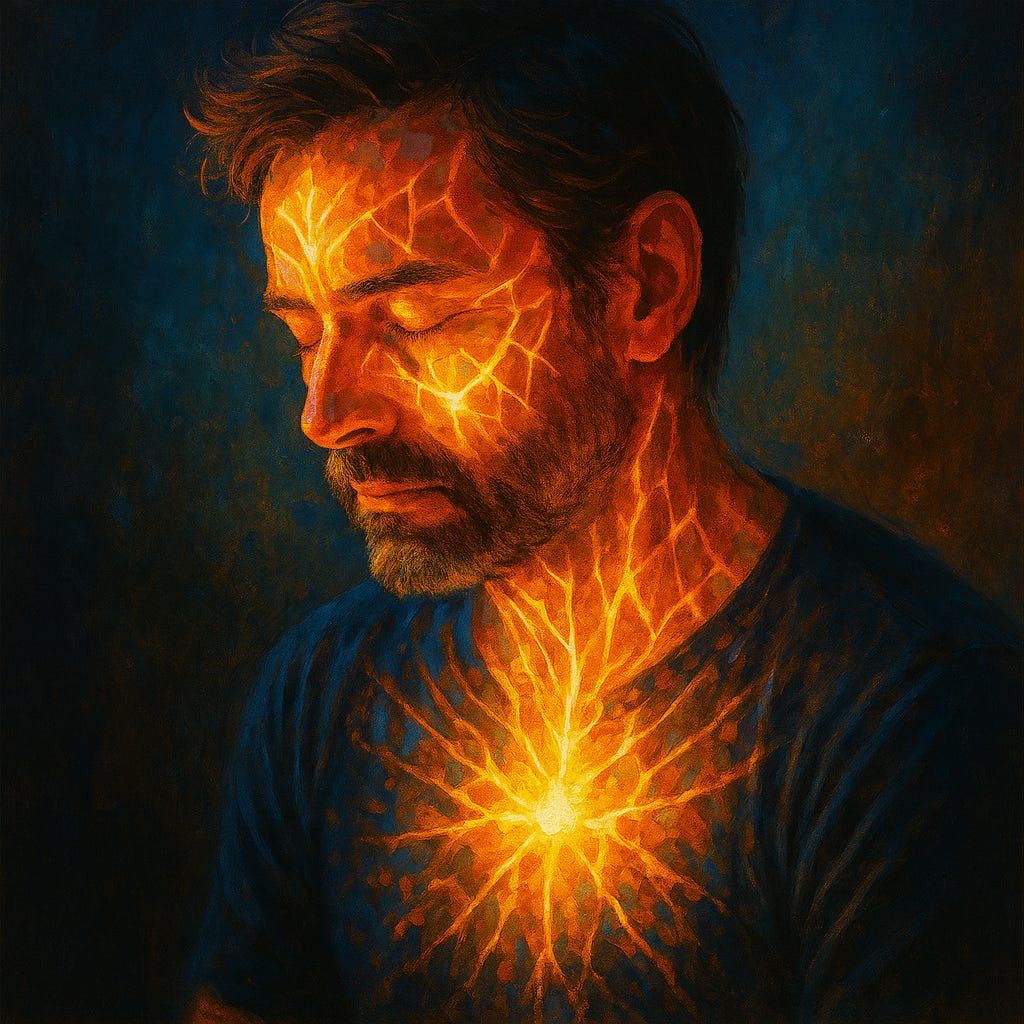
Why Some People “Manifest It All” and Others Walk Through Fire
From the outside, it can look like some people awaken and quickly manifest everything: new careers, partners, abundance, followers, clarity.
Meanwhile, others — maybe you, definitely me — seem to walk through fire: loss, illness, bankruptcy, relationship endings, repeated dark nights, and a strange loneliness that no crowd can fix.
I used to think it was about effort, luck, or karma. Now, I feel it has more to do with surrender and honesty.
At some point, I had to admit:
Yes, I am exhausted.
Yes, this is bone‑deep fatigue.
Yes, I have stayed in roles, relationships, and patterns that drain me because I was afraid to let go.
That level of honesty broke something in me — but in a good way.
It was no longer about performing spirituality or manifesting on schedule. It became about truth: “This is where I really am. This is what it really costs my body, my heart, my soul to live the way I’ve been living.”
From there, awakening stopped being a performance and started being a relationship — with my own life, my own body, my own limits.
Empath, Not Weak
Like many on this path, I eventually realized I’m an empath.
I don’t just feel my own emotions. I feel the room. I feel my patients. I feel the quiet grief in people’s eyes, the anxiety under their words, the collective tension in the air. For much of my life, I used this sensitivity to care, to fix, to overgive.
I thought being strong meant absorbing everything and asking for nothing.
Over time, that turned into:
Chronic exhaustion, even when I slept
Emotional overwhelm or numbness
A sense that my life force was leaking everywhere
A deep loneliness, even when surrounded by people
Moments of wondering if there was a single soul on this planet who could really see or stay with me
Being an empath is not a weakness. It is a finely tuned instrument — a creator’s tool — that can sense nuance, truth, and subtle shifts in ways others can’t.
But like any powerful instrument, it needs boundaries and training.
Without boundaries, empathy becomes self‑abandonment. With boundaries, empathy becomes wisdom.
Boundaries as an Act of Love
Spiritual exhaustion eventually forced me to look honestly at where my energy was going.
I began to see:
Which conversations left me empty for hours.
Which relationships depended on me being the healer, never the human.
Which commitments I kept out of guilt, fear, or habit — not love.
How often I said “yes” while every part of my body was saying “no.”
Little by little, I started treating boundaries as a spiritual practice.
No, I cannot hold everyone all the time.
No, I will not keep sacrificing my body to maintain an image, a role, or an old identity.
No, I don’t have to please people just because I can feel their pain.
Each “no” felt terrifying at first. But with every honest boundary, something in me relaxed. My nervous system started to trust that I would not keep throwing it into situations that drained it. My body began to believe that I would listen when it whispered, “Enough.”
I realized: everything I tell others — they deserve rest, love, healing — I also deserve. Everything I pour into patients, readers, and loved ones, I must finally learn to pour into myself first.
Even the Great Ones Were Exhausted
It helps to remember that spiritual exhaustion is not new; it’s woven into the stories of those we consider “great.”
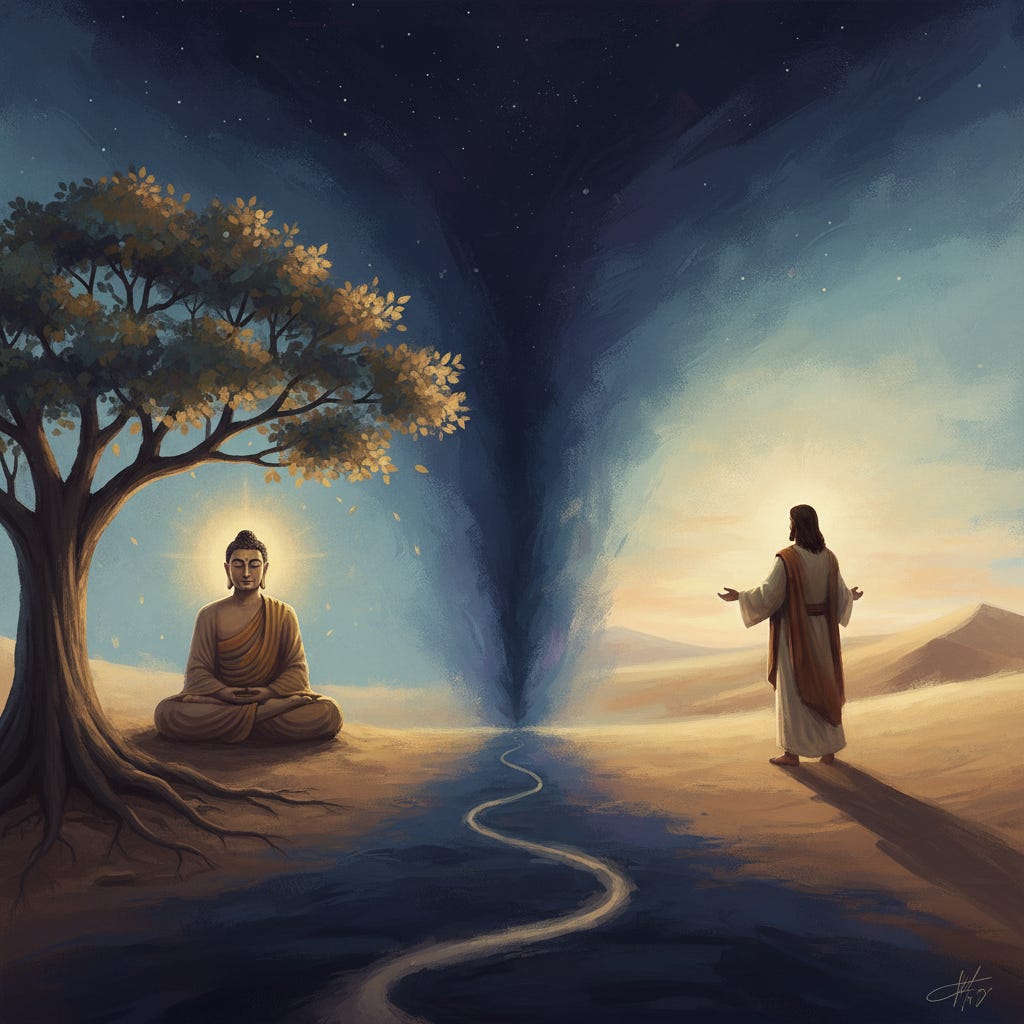
Siddhartha, who became the Buddha, spent years wandering, practicing extreme asceticism, and pushing his body and mind to the edge in search of freedom. Only when he was utterly depleted did he finally sit beneath the Bodhi tree — not to conquer, but to rest and see clearly. In that surrender, awakening revealed itself.
Jesus lived around thirty years in obscurity before his brief public ministry. Even then, he spent forty days in the wilderness — alone, hungry, tempted — before stepping fully into his calling. Those forty days weren’t a punishment; they were a profound preparation, a deep inner alignment that could only happen in emptiness.
Different cultures, different stories, same pattern: long seasons of uncertainty, fatigue, and “not knowing” often precede moments of deep realization.
Spiritual exhaustion is not a sign you’ve failed the path. Often, it’s a sign you are exactly where the path does its deepest work.
Where I Am Now
I’m still in it.
I’m not writing this from a perfected life or a clean, triumphant ending. I am a physician who has flirted with bankruptcy, who has lost old worlds, who has lain awake at night wondering, “What now?” — and who still, on some days, feels the ache of deep fatigue in bones and soul.
And yet, something fundamental has shifted.
I am more at peace alone now than I used to be surrounded by people who couldn’t really meet me. I’d rather sit in honest solitude than shrink myself to fit rooms that no longer feel aligned. What once felt like loneliness now often feels like safety, clarity, recovery.
My awakening still has trampoline days. There are times of light, visions, awe, and profound love. There are times of doubt, grief, and exhaustion. The difference now is that I no longer see the lows as proof that I’ve “lost it.”
I see them as part of the rhythm of being human on a spiritual path.
If You’re Spiritually Exhausted, This Is for You
If you are reading this and feeling spiritually exhausted — if your body, mind, heart, and energy all feel tired — please know:
You are not behind.
You are not doing it wrong.
You are not less spiritual because you’re exhausted.
You may simply be at the point where your soul refuses to build a new life on top of an old nervous system.
This season is an invitation to:
Rest more deeply than your mind thinks is “reasonable.”
Be radically honest about what drains you.
Let boundaries become part of your spiritual practice.
Offer yourself the same compassion you so easily extend to others.
You deserve to heal. You deserve your own love. Everything you teach others, you deserve to receive — first from yourself, and then from those who can truly meet you.
Be you. The real you. The tired, luminous, imperfect, honest you.
The right people and souls will find you there — not because you performed awakening perfectly, but because you were willing to tell the truth about what it actually feels like to wake up.
Author Bio.
Dr. Shiv Kumar Goel is a board‑certified physician in Internal, Functional, and Aesthetic Medicine and the founder of Prime Vitality Wellness in San Antonio, Texas. His work weaves evidence‑based medicine with Eastern wisdom, circadian biology, and AI‑driven insights to help people heal at the level of body, mind, and spirit. Through his clinical practice and writing on Medium, Substack, and beyond, he shares hard‑won lessons from his own awakenings, burnout, and rebuilds to support others on the path of true wellness and spiritual integration.
Amazing article and I resonate with every part!! Thank you for sharing your experiences!! It helps others know we are not alone on this journey!! You so deeply and eloquently describe the pain and suffering that is endured. Oh how that suffering becomes a strict and relentless teacher who you despise…. But there is no better teacher I have found. From my deepest suffering came my unconditional love and care for all things.
Thank you again, Dr. Goel for sharing your story!! It is a guide to help myself and others along their awakening journey!!