

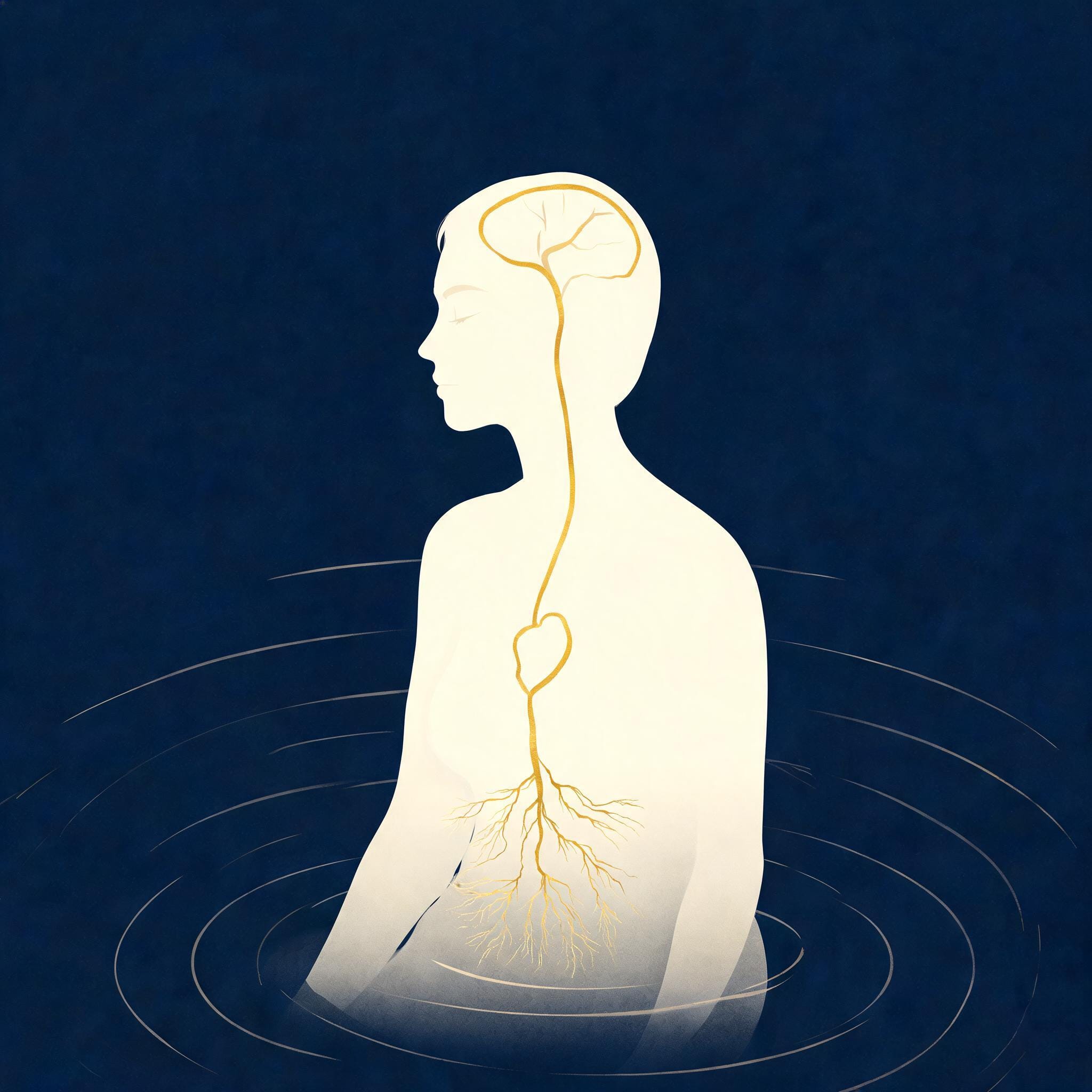
Irene came in for migraines.
That was the chief complaint. Thirty-six years old, elementary school teacher, already diagnosed with irritable bowel syndrome, already scoped twice — endoscopy and colonoscopy both showing diffuse inflammation, gastritis, GERD. Already told she couldn’t tolerate GLP-1 medications because of her IBS. She had done her research online and found me.
She seemed, on the surface, like a patient with a well-documented GI history and a headache problem.
I almost missed what was actually going on.
She mentioned she wanted to lose six pounds. I looked at her. She was in good shape. Six pounds was not a medical problem. I asked why.
She said she wanted to stay young and pretty as she got older.
I asked what her weight had been two years ago. She said she had been about ten pounds lighter. They had just gotten married around that time. She smiled when she said it — he was crazy about me.
Is he not crazy about you now?
I made it light. She half-laughed. Then she said: yeah, it’s just…
And she stopped.
I asked about sleep. She said it had never been great but had gotten significantly worse over the last year or so. I asked what changed. She said nothing. Her husband worked construction, came home late, slept like a baby. I said: well, someone in the house is getting good sleep.
She didn’t laugh that time.
The picture was assembling itself. Poor sleep for over a year. Weight gain of ten pounds. IBS worsening. Migraines. Irregular periods for the past few months — she was worried about early menopause, and they hadn’t had children yet. A marriage that had quietly shifted into something she didn’t have words for yet.
She wasn’t imagining any of it. She was not broken. Her body was doing exactly what a body does when it is living inside a chronic stress load it cannot name and cannot escape.
What “Leaky” Actually Means
Before I tell you what her tests showed, it is worth pausing on the biology. Because “leaky gut” is one of those terms that has been simultaneously dismissed by mainstream medicine and overclaimed by the wellness economy — and both camps have gotten it partly wrong.
The gut epithelium is a single cell layer thick. One cell. Separating the lumenal contents — bacteria, food antigens, endotoxins — from the portal circulation and the systemic immune system. That architecture should be astonishing every time we consider it.
What holds it together is a network of tight junction proteins: occludin, claudin, ZO-1, ZO-2. These proteins form a dynamic seal between adjacent epithelial cells. They are not static. They open and close in response to bacterial metabolites, dietary composition, cortisol, alcohol, NSAIDs, and inflammatory cytokines.
Cortisol is particularly relevant here. Chronic HPA axis activation — the kind produced not by a single stressful event but by sustained, low-grade, inescapable pressure — directly downregulates tight junction protein expression. The barrier does not fail suddenly. It is quietly dismantled, over months, by the body’s own stress response.

Intestinal hyperpermeability — the clinical term for what the wellness world calls leaky gut — is what happens when that dismantling goes unchecked. Bacterial lipopolysaccharide (LPS), food-derived antigens, and microbial metabolites that should remain in the lumen cross into the lamina propria and portal circulation. The immune system encounters them. It responds. That response is not localized. It is systemic. And it is measurable.
This is not fringe biology. Dr. Alessio Fasano’s foundational work at the University of Maryland established zonulin as the primary endogenous regulator of tight junction permeability. Elevated serum zonulin is a measurable, reproducible marker of barrier dysregulation. It has reference ranges. It gives the clinician something to act on — not a diagnosis to argue about, but a number that either confirms the clinical picture or complicates it.
The argument about whether leaky gut is “real” is the wrong argument. The tight junctions are real. The permeability is measurable. The downstream immune activation is well-characterized. What has been legitimately debated is the overclaiming — the wellness industry’s habit of attributing everything from autism to autoimmune disease to a leaky gut without measuring any of it.
Both positions miss the patient sitting across from you.
The Tests That Make the Picture Precise
Irene’s tests confirmed what her story had already told me.
Cortisol was persistently elevated — not a single high morning reading but a pattern of dysregulation across the diurnal curve. The morning awakening response was blunted. The evening cortisol was elevated when it should have been low. Her HPA axis was running hot and running late.
Her gut permeability panel showed serum zonulin elevated above the reference range. LPS antibodies — IgG and IgA fractions — were positive, indicating active LPS translocation across the barrier into systemic circulation. Secretory IgA was low, meaning her mucosal immune defense, the first-line antibody that should be patrolling the gut lumen, was depleted. Fecal calprotectin confirmed active intestinal inflammation — a neutrophil-derived marker that the colonoscopy had characterized structurally but not etiologically. A GI-MAP identified dysbiotic gram-negative bacterial overgrowth. Gram-negative bacteria are the primary LPS source. The bacteria were producing the endotoxin. The endotoxin was crossing the barrier. The barrier was failing because the cortisol had been taking it apart for eighteen months.
The GI physician had scoped her and found inflammation. That was accurate. What the scope cannot show is why the barrier is failing. It cannot measure zonulin. It cannot quantify LPS translocation. It cannot tell you that the tight junction proteins holding that single-cell layer together have been chemically dismantled by sustained cortisol exposure.
A complete panel for intestinal permeability includes: serum zonulin, LPS antibodies (IgG, IgM, IgA), secretory IgA, fecal calprotectin, and a comprehensive stool analysis such as GI-MAP. These tests are available. They have reference ranges. They are not experimental. They change what you treat and in what order.
Test, don’t guess. This is the line that separates functional medicine from functional guessing.
The Root Cause Was Never the Gut
Here is what I want to say clearly, because it is the part that gets lost in the supplement protocol.
Irene’s root cause was not leaky gut.
Leaky gut was where we found the damage. The root cause was a 36-year-old woman trying to hold a marriage together in silence, wanting a child, teaching other people’s children every day while quietly grieving the version of herself her husband used to reach for. The ten pounds on the scale were not a metabolic problem. They were a measurement of something she had no language for yet.
The cortisol was not a lab abnormality. It was the biochemical signature of a life being carried alone.
The barrier failure, the dysbiosis, the irregular cycles, the migraines — these were downstream. They were faithful. The body was not malfunctioning. It was escalating. It was writing in every available medium — gut, hormones, sleep, cycle, head pain — the story that Irene had not yet been able to speak out loud.
This is the part that neither mainstream gastroenterology nor the wellness economy is equipped to hold. The GI physician cannot spend forty minutes in that room. The supplement company cannot ask about the marriage. The algorithm cannot hear the pause after yeah, it’s just…
But the clinician can. That is still, despite everything, what we are for.
Your symptoms are not random. They are your biography written in your biology.
The Repair Protocol — Sequenced, Not Scattered
When the biology is this layered, the repair protocol must be sequenced. Treating the gut without addressing the HPA axis is like mopping the floor without turning off the tap.
First: the cortisol. You cannot repair a barrier that is being continuously degraded by its own stress hormones. For Irene, this meant addressing sleep directly — circadian rhythm anchoring, consistent sleep and wake times, reducing evening cortisol through light management and nervous system support. It meant creating space for the conversation about her marriage that she wasn’t ready to have yet — not forcing it, but opening the door. Adaptogenic support for HPA axis regulation: ashwagandha, phosphatidylserine, rhodiola in appropriate combination. Her irregular cycles were not a separate problem. Chronic cortisol elevation suppresses pulsatile LH release. The HPA axis and the HPG axis share regulatory circuitry. When one is dysregulated, the other follows. The gut problem and the cycle problem and the sleep problem were one problem in three departments.
Second: the barrier substrate. L-glutamine at therapeutic dose — the primary fuel source for enterocytes, the cells that line the gut wall, depleted in states of chronic intestinal stress. Zinc carnosine specifically for tight junction integrity, studied in NSAID-induced gut injury and chemotherapy-associated mucositis, with dual mechanisms through both zinc’s role in tight junction protein synthesis and carnosine’s direct mucosal protection. Saccharomyces boulardii CNCM I-745 — not a generic probiotic, but a specific non-colonizing yeast with documented effects on sIgA upregulation, pathogen exclusion, and tight junction support. Sodium butyrate for colonocyte fuel and tight junction gene expression via histone deacetylase inhibition. Deglycyrrhizinated licorice for the gastric mucosal layer, given her GERD and active gastritis findings.
Third: the microbial environment. The gram-negative dysbiosis driving her LPS load required a targeted approach — not a broad-spectrum antimicrobial, but a combination of specific herbal antimicrobials guided by the GI-MAP sensitivities, followed by a structured reseeding protocol. Fiber diversity to support butyrate-producing commensals. Fermented foods when tolerated.
Fourth: the anti-inflammatory dietary framework. Not a 30-day elimination protocol. The wellness economy sells 30-day cycles because 30 days is marketable. Real barrier remodeling takes three to six months minimum. Biology has its own clock. The goal is not a perfect elimination diet that creates new anxiety around food. The goal is a sustainable reduction in inflammatory dietary load — processed seed oils, refined carbohydrates, alcohol — while preserving the pleasure and the cultural and relational meaning of eating. Food eaten in fear does not heal a gut.
The Systems View — Where This Goes If You Miss It
Irene’s case is not unusual. It is typical of what goes undiagnosed when we treat organ systems as separate.
The gut-HPA axis is bidirectional. Chronic intestinal inflammation drives cortisol dysregulation through cytokine-mediated HPA activation. Chronic cortisol elevation, in turn, directly disrupts tight junction integrity. The downstream effect — increased LPS translocation — activates NF-κB signaling and systemic inflammatory load. The cycle feeds itself.
The gut-brain axis runs through the vagus nerve, through microbial metabolite production — short-chain fatty acids, tryptophan metabolites, GABA precursors — and through enteric nervous system cross-talk. The LPS translocation Irene had was activating neuroinflammatory pathways that were contributing to her migraines. Her head pain was not separate from her gut. It was downstream of it.
The gut-cycle axis is less discussed but clinically significant. The estrobolome — the collection of gut bacteria responsible for estrogen metabolism — was disrupted by her dysbiosis. Estrogen recirculation was impaired. Combined with HPA suppression of LH pulsatility, her cycle had no stable hormonal environment to work within.
The gut-skin axis will present in her future if the barrier is not repaired. LPS translocation drives systemic mast cell activation. Mast cell activation has dermal expression — acne, rosacea, eczema, unexplained urticaria. The patients who treat their gut and notice their skin improving are not imagining things. The connection is real even when it is invisible to specialists managing each organ system separately.
This is what the siloed model of medicine cannot hold. Not because the specialists are wrong within their domain. But because the patient does not live in a domain. She lives in a body. And the body is one connected system, following one set of rules, telling one story — in every language it has available.
What Happened to Irene
Three months later, her migraines had decreased significantly in frequency. Her periods had regularized. She had lost the six pounds — not because we targeted the weight, but because we addressed the cortisol-driven visceral fat accumulation upstream of it. Her sleep was better. Her zonulin had come down. Her sIgA had recovered. The LPS antibody titers were trending toward resolution.
She came in for a follow-up and said something I have heard versions of many times: I didn’t realize how bad I felt until I started feeling better.
I asked about the marriage. She smiled differently than she had the first time. Still complicated. Still in progress. But she had started saying things out loud that had been living in her body for a year and a half.
The gut was not her problem. The gut was where her biography had started writing itself in biology.
To the physician reading this: Irene’s root cause was not leaky gut. Leaky gut was where we found the damage. The root cause was a 36-year-old woman trying to hold a marriage together in silence, wanting a child, not sleeping, and watching ten pounds on a scale represent something her husband used to see that she was afraid he no longer did. The cortisol was not a lab abnormality. It was the biochemical signature of a life being carried alone. The barrier failure, the dysbiosis, the irregular cycles — these were downstream. They were faithful. The body doesn’t malfunction. It escalates. If you have patients like Irene — scoped, diagnosed, medicated, still symptomatic — the upstream layer is worth mapping. Zonulin, LPS antibodies, diurnal cortisol, sIgA. These are not esoteric tests. They are available, they have reference ranges, and they change the clinical picture.
To the patient reading this: if your tests are back and the treatments aren’t working, ask the harder question. Not what is wrong with your gut. Ask what your gut is responding to. The answer is almost never in the colon. It is almost always upstream — in the life the body has been asked to carry.
You are not imagining it. You are not broken. The map your physician has may simply be missing a layer.
Ask for the layer.
Good labs. Bad life. There’s a reason.
You cannot heal what you don’t measure. But you also cannot measure your way to the right question without first listening to what the patient is actually saying.
Irene told me everything in the first ten minutes. I just had to stop charting long enough to hear it.
All identifying details modified. Composite elements used to protect patient privacy.
Dr. Shiv Kumar Goel is a board-certified physician practicing internal, functional, and aesthetic medicine in San Antonio, Texas. He is the founder of Prime Vitality Care. He is the author of the forthcoming book Healing the Split: When Your Biology Is Fighting Your Biography, hosts the Healing the Split podcast, and writes the Healing the Split Substack at healingthesplit.com.
This is a beautifully written essay that I as a lay person can understand. Thank you!
This insightful story deeply resonated with me because it was one of the first times I had seen a holistic medical doctor explain this relationship so clearly on a public platform. As someone who experienced chronically elevated cortisol in my younger years, I came to understand how profoundly this stress hormone can influence health. In my case, it contributed to abdominal obesity, prediabetes, leaky gut syndrome, and eventually an autoimmune disorder.
The patterns and nuances you described closely reflected my own experience. Fortunately, my curiosity to understand the underlying biology, together with the guidance of knowledgeable functional medicine physicians and distinguished mentors, helped me reverse these conditions through sustained lifestyle changes and appropriate medical support.
The impact of cortisol on health became so significant in my own journey that I eventually wrote an entire book devoted to this topic, Cortisol Clarity. Looking back, I believe chronically elevated cortisol was one of the most important biological triggers and aggravators of my metabolic and inflammatory conditions. Thank you, Dr. Goel, for writing such an educational, thought-provoking, nuanced, and compassionate piece. I hope it reaches readers who can benefit from your experience and unique perspectives.